像Scryfall这样的卡片数据库是许多赌徒的重要组成部分。能够按姓名、卡片类型或文本字段查找每张卡片对各地的牌组建设者来说都是一个巨大的优势。这比魔术好得多:聚集玩家过去的做法是:依靠杂志和口碑来获取[&&8230;]

Card databases like Scryfall are an important part of many gamblers. The ability to look up each card by name, card type or text field is a great advantage for deck builders everywhere. It’s much better than what Magic: The Gathering players used to do: rely on magazines and word of mouth for information on cards.
In Scryfall, players can relatively easily search every card in their database with relative ease. The pictures are sharp and large. Newly pampered cards are often available on the site within a few hours, so players use them to look up the new effects. Often the site is used as a deck building resource so Scryfall has now decided to make the site a better place for brewers. Today they announced in a tweet that their website will be hosting its own deck building tool.
We pride ourselves on bringing you preview cards fast, indexed, and searchable. You will soon be able to create decks with these cards directly from your searches: https://t.co/sy3jGKFgLa pic.twitter.com/quJfN390xN
– Scryfall (@scryfall) June 26, 2019
Users can select specific prints of cards, sort them by size and color, and use all kinds of functions with the tool. To add a card from a search, just click on it: it’s that simple! To preview a decklist on the site, see a sample list.
When can you start?
Unfortunately, the function is still in closed beta. The exact date for the feature’s release has not yet been announced. it’s just coming “soon”. Still, it’s an exciting new feature that will take Scryfall to the next level again if it lives up to the hype.
What do you think of Scryfall’s new deck building tool? Are you planning to use it to create new lists or are you sticking to a different site? Or is there another side that just does the job better? Let us know in the comments below and come back to find out more about Magic: The Gathering!
The post Scryfall declares new Magic: The Gathering deck builder first appeared on DECKSAND FENCES DAILY.
Like many CCG curious people, I can’t even think of playing Magic: The Gathering properly. Building a deck from a library of thousands of cards and mechanics makes impossible demands on my time and – frankly – skills. That will soon change with Jumpstart, a new format slated to hit paper on July 17th in the US and also in Magic: The Gathering Arena, its excellent free PC-based incarnation.
Look, I’m not the only one. “I still find it difficult to know for sure how many countries to put in my deck,” says Mark Heggen. And he’s the main product designer for Magic. So Jumpstart sounds interesting to me as an official way to play magic that bypasses the whole thing.
Building decks is a fun and important part of Magic, obv, but Jumpstart aims to give new players another entry point alongside starter sets that include pre-built decks that you’ll soon want to play beyond and drawing formats offer you build a deck while you play, but they require a large supply of cards and a lot of knowledge. But it’s also aimed at established players who are either short on time or want a quick Magic hit, as Heggen tells me it’s just as deep as any other form of Magic.
“We were surprised to see that there is a lot of room for depth and complexity because we made wrapping easy. We found that we can add pretty advanced cards and really cool old cards that do wild, unexpected things. It’s not overly simplified or boring. We can put a lot of depth in there because we took the pressure off by doing much of the first part for you. “
Building decks in the arena is easier than searching through large decks of cards, but it’s still a big undertaking.
Here’s how it works. You and your opponent each open two packs of Jumpstart cards, and bam, those are your decks. Each pack consists of a pre-made set of 20 cards from one of 46 themes, ranging from lightning to cats, wolves to pirates. Each card has its own strategy and mechanics. Once you’ve put the two packs together, it’s up to you to figure out their on-the-fly interactions.
Jumpstart was born from a suggestion by Doug Beyer, who works on Magic’s World Building and Narrative Design. “His initial idea was, what if we used our design resources to think about the mana curve and the number of lands and how much distance to creatures and things like that?” paraphrases Heggen. “How much of that could we dump from the player?”
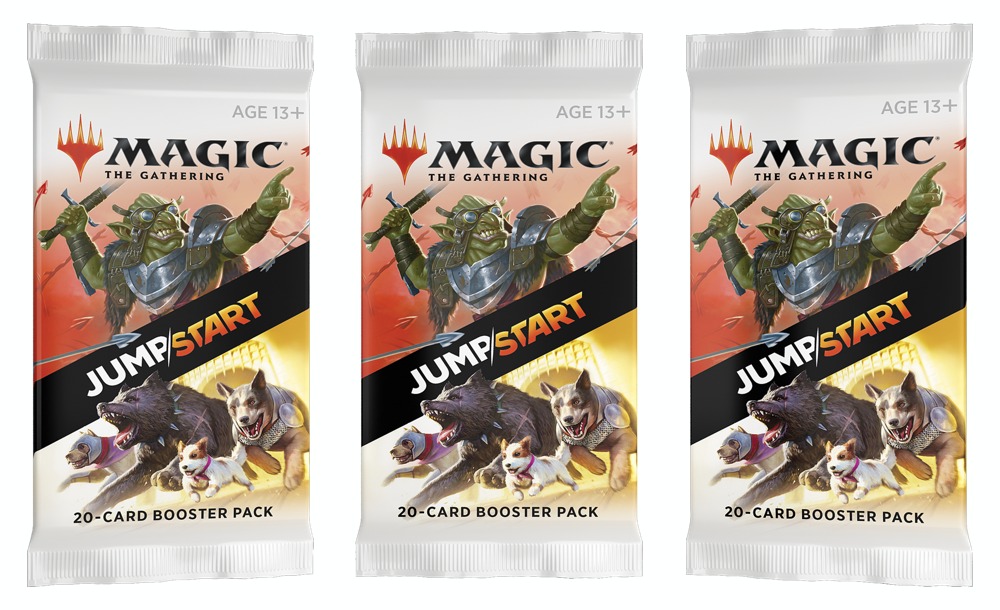
Of course, Jumpstart isn’t the only effort CCGs make to ease the pressure of deck building, at least in physical games. In 2018, Magic’s original designer Richard Garfield released Keyforge, a physical deck game where every package purchased is a random deck. So that’s a nice piece of symmetry. Even closer to Jumpstart, however, is 2012 Smash Up, right down to your deck with two faction-based 20-card packs.
“They all use this basic motivation, namely the idea of combining two things in order to achieve a surprising third result,” says Heggen. “There’s always been a big part of Magic that is essentially nothing more than the dynamics played with thousands of variables. He plays this creature plus this plus this battlefield, your hand, your library: Magic is full of dynamic. “
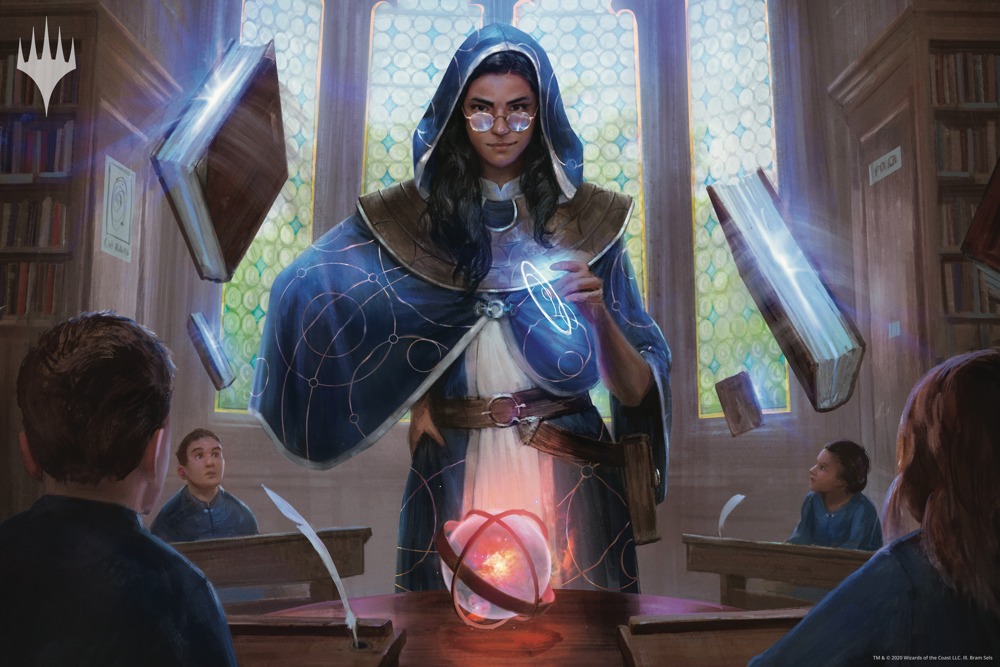
While it’s not exactly original, we can say that Jumpstart’s approach worked, and as Heggen says, it’s magic, right? It is endowed with an amazing depth, especially since in addition to cards from the latest set – M21 – there are over 500 reprints of older cards, carefully selected so that each pack is holistic and plays well with others, as well as mostly a few new cards there holes to fill.
“It’s funny to think back to those early conversations because we thought we might need ten topics, and we did the math and figured out how the combinations would work, and then we asked what our ten topics were. And then we left each meeting with all the white boards on. All right, there are a lot more than ten. “
So the end product contains 46 themes that together make up 121 unique packs. Some are more common than others – for example, there are four different minions packs. There is only one pack for some other topics. These rare ones are usually difficult to play, not the kind of thing you want every time, but exciting when you come across them. “They are special desserts, not the main course,” explains Heggen. To get a better idea of why, we’re going to be exclusively presenting one of them tomorrow along with a more general package.
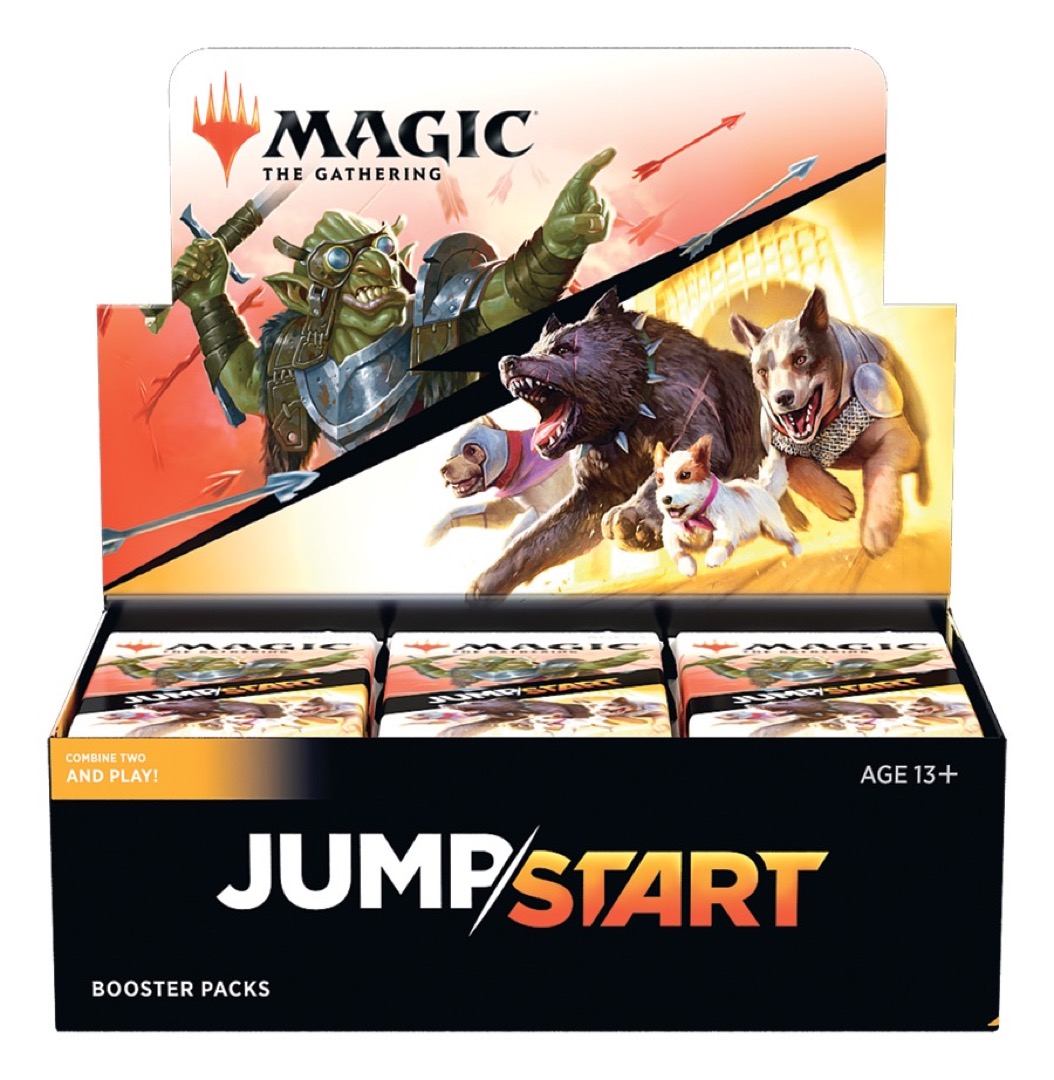
In the physical world, Jumpstart looks a bit like this.
Wizards couldn’t tell me exactly how Jumpstart will work in the arena as the details are still being worked out. It’s a complex matter, after all, as the cards in each format are regular Magic cards that are legal in other official formats. So if you get access to a package in Arena, will it become part of your collection? Or will you be earning tokens to buy into jumpstart games much like you play ranked games today? If so, your deck is likely to be usable only once.
What is certain, however, is that there will be minor differences to the physical version. The official physical style of play is to open four packs, then choose how to pair them, and then play with two decks. This process plays and works a little differently because Arena is running on a PC. “You can do things that don’t make sense in the physical world,” says Heggen.
The card pool will also be a little different as some cards don’t work as well on computers because they ask the player to constantly confirm decisions, things that real players wouldn’t have to do.
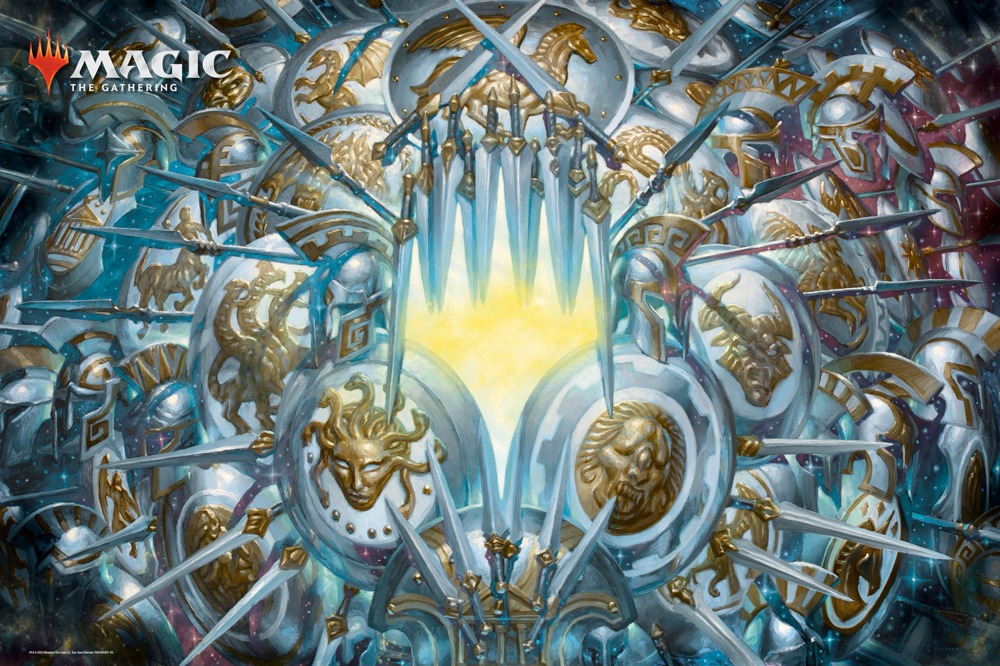
Either way, I look forward to trying it out to practice a less-prepared Magic game that also brings a nice dose of nostalgia with it. Magical sets are usually based around storytelling, but for Heggen, Jumpstart is what happened to those cards once you added them to your collection.
“It’s about reaching deep in your closet and pulling out that deck that you made ten years ago that felt revolutionary because all of your creatures had tramples or merfolk. So Jumpstart is intentional everywhere. We can reach around and hit topics and themes, some of which we also meet in our current story, and to our delight we also meet things that we haven’t been able to dust off in a long time because we love it and it’s funny or impressive. Jumpstart is a real surprise bag. “
Look out for an exclusive preview of two of Jumpstart’s themes tomorrow that also shows the bewildering depth of thinking wizards put into card design and choices.
Watch on YouTube ‘); jQuery (yt_video_wrapper) .remove (); }); }); } function runFacebookPixel () {! function (f, b, e, v, n, t, s) {if (f.fbq) return; n = f.fbq = function () {n.callMethod? n.callMethod.apply (n, arguments): n.queue.push (arguments)}; if (! f._fbq) f._fbq = n; n.push = n; n.loaded =! 0; n.version = ‘2.0’; n.queue =[]; t = b.createElement (e); t.async =! 0; t.src = v; s = b.getElementsByTagName (e)[0]; s.parentNode.insertBefore (t, s)} (window, document, ‘script’, ‘// connect.facebook.net/en_US/fbevents.js’); fbq (‘init’, ‘700623604017080’); fbq (‘track’, ‘PageView’); }}
The post Magic: The Gathering's Jumpstart ditches deck-building first appeared on DECKSAND FENCES DAILY.